Planning a RRIF at 65: Monthly Income, Tax Credits and CPP and OAS Timing
A planned RRIF could provide regular income and tax credits, while a cash flow plan helps weigh withdrawals against CPP and OAS timing.
Turning 65 brings several retirement decisions into focus at once: when to start CPP and OAS, how to draw money from an RRSP, and how much income to take from savings. One Canadian retiree’s plan offers a practical example. He expects about $20,000 a year from CPP and OAS, alongside self-employment income, and plans to open a RRIF at 65 to arrange withdrawals and make use of available tax credits.
Those figures describe his circumstances, not a target for other households. The right mix depends on a person’s income, spending, savings, household situation and expectations about how long retirement may last. His main point is that the decisions connect: a withdrawal plan should account for pension income, investment accounts and other sources of cash together.
Weighing when to start CPP and OAS
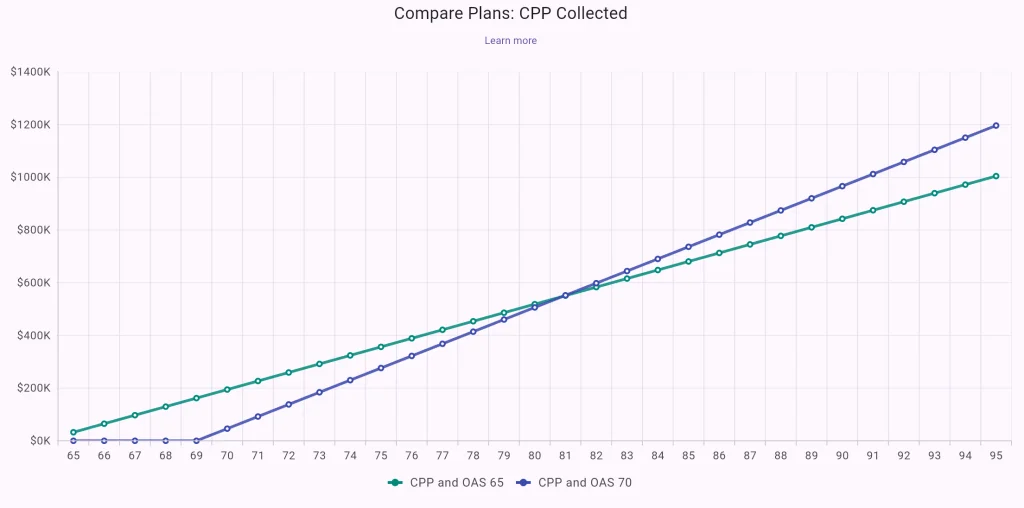
In the example, CPP can be delayed from 65 to 70 for a 42% increase in payments. Delaying OAS over the same ages brings a 36% increase. For a couple, delaying both partners’ benefits may increase the household’s later income. The trade-off is timing: someone who delays must plan for the years before the larger payments begin.
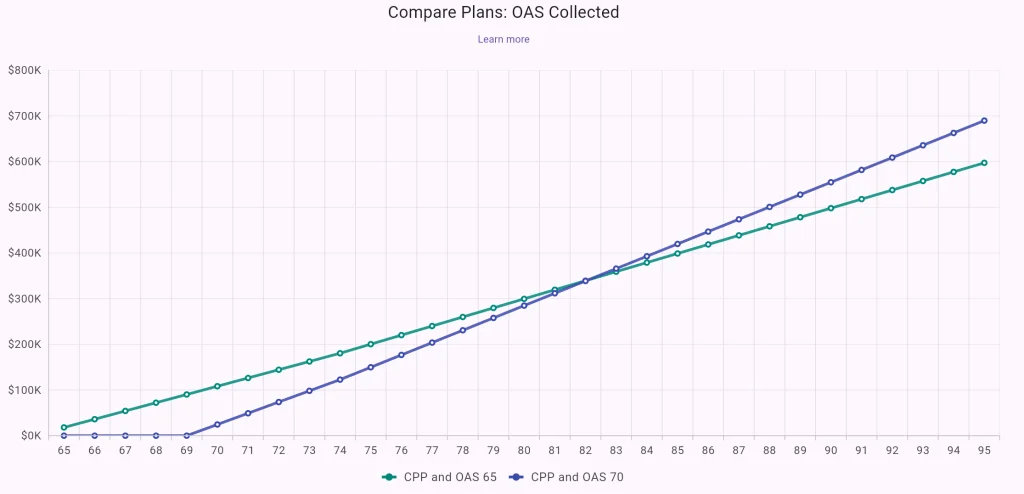
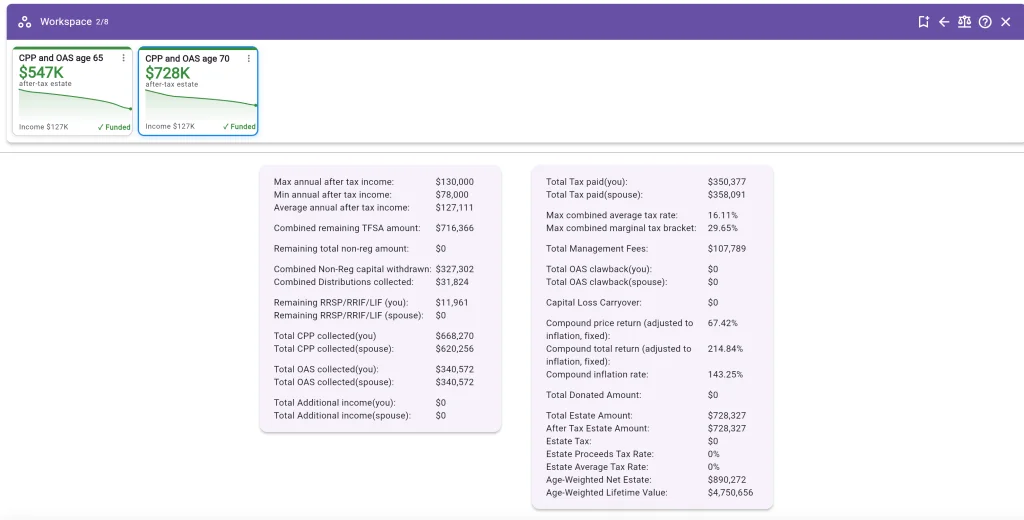
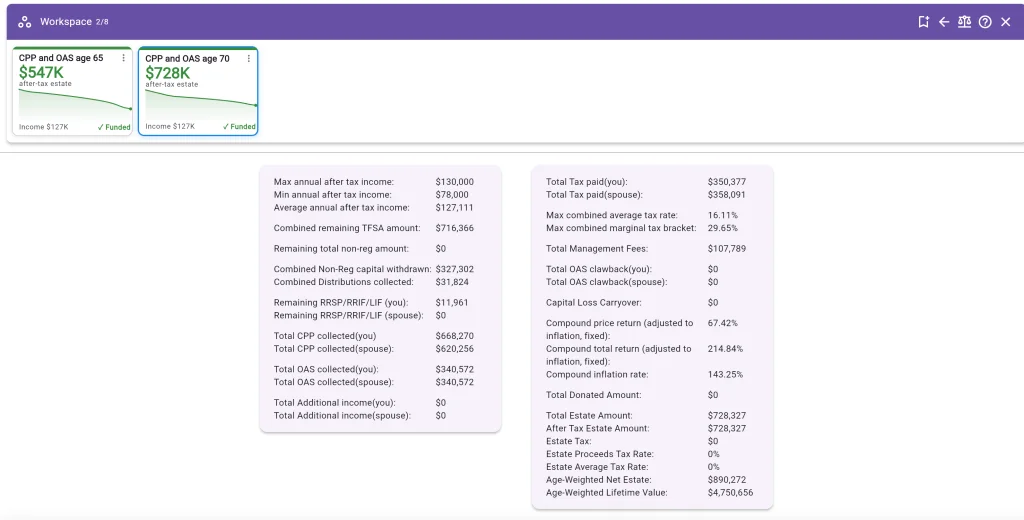
A cash flow projection can help compare those choices over a retirement plan. The author ran an example for a couple with generous CPP payments and full OAS, using the MayRetire calculator. The plan extended to age 95. In that scenario, delaying CPP and OAS until 70 produced a projected estate value $181,000 higher than the comparison plan. Total benefits were $1,969,000 with the delay, against $1,672,000 without it—a difference of $297,000.
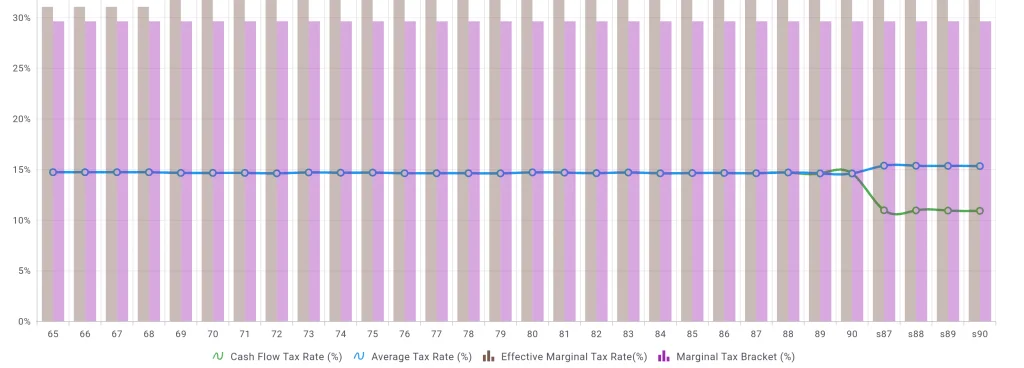
Those are results from one modeled household, not a promise about what another couple will receive. A projection can show how different start dates affect income and estate value under its assumptions; the outcome depends on the details entered. The author says his own CPP and OAS timing is based on a cash flow plan that includes longevity projections.

MayRetire has a free version and a paid Plus subscription. The source describes an offer of $59 for an annual subscription, including a $20 saving through its referral link. The author also points readers to a Canadian Retirement Club, where members are taught to use the calculator and plan withdrawals. Another option mentioned is working with an advice-only planner.

Why open a RRIF at 65?
The author doesn’t have an employer pension, so he plans to convert part of his RRSP savings into a RRIF. One reason is the Pension Income Amount, which he describes as a credit on the first $2,000 of eligible pension income. In his account, it could reduce federal tax by up to $280, with additional credits available in most provinces. Eligibility and the actual tax effect depend on a person’s circumstances.

He also expects to avoid a $25 fee charged by his brokerage for each RRSP withdrawal. That saving is specific to his provider, so people considering a conversion should check their own account fees.
A RRIF has required minimum withdrawals. The source lists the annual minimum as a percentage of the account, based on the age of the account holder or their spouse: 3.33% at 60, 3.45% at 61, 3.57% at 62, 3.70% at 63, 3.85% at 64, and 4.00% at 65. The listed rates rise to 4.17% at 66, 4.35% at 67, 4.55% at 68 and 4.76% at 69.

The author says RRIF withdrawals up to the minimum aren’t subject to withholding tax. That affects what is deducted at the time of payment; it doesn’t make the withdrawal tax-free. Any tax owed still has to be settled when filing a tax return. A RRIF is therefore a way to schedule taxable income, not a way to avoid tax.
Turning savings into a monthly payment
For a simple illustration, the author estimates that a $375,000 RRIF, with a 4% minimum withdrawal, would pay $15,000 over a year. That works out to $1,250 a month. The calculation is $375,000 multiplied by 0.04.
He plans to estimate his monthly needs and transfer an appropriate amount to the RRIF. In 2027, he expects his income to include CPP, OAS, self-employment income and RRIF withdrawals. The regular payment could make spending easier to organize, while the required minimum rises with age according to the schedule he provides. The amount an account can support will depend on its balance and withdrawal rules.
What happens when income is higher than current spending needs? In the author’s situation, his wife is still working, household spending is relatively low, and he has TFSA room. He describes directing unneeded money toward his wife’s RRSP or a tax-free account as a possible way to manage household taxes. That approach rests on their particular incomes and available account room; it won’t fit every couple. He says he compares his current tax rate with the rate he expects in retirement.
Credits and a plan that fits the household
The author also expects to qualify for an age credit of $9,448 in the following year, according to his account, and says the full credit applies for that year even if someone turns 65 late in it. The article doesn’t specify a calendar year for that figure, so readers should check the amount and eligibility that apply to them before building it into a budget.
The practical takeaway is to put benefit start dates, account withdrawals, fees, credits and household spending into one projection. A RRIF may offer a predictable payment and reduce withdrawal fees in some accounts, while its taxable minimum withdrawals limit how flexibly money can remain invested in the RRSP. Comparing scenarios can show whether the proposed monthly income fits the household’s needs and how delaying CPP or OAS changes the rest of the plan.
The source’s MayRetire figures are illustrations, and the author explicitly says his discussion isn’t advice. A general plan can help people identify the questions to resolve; account terms, personal tax circumstances and income needs determine the answers.