A Canadian Retirement Cash Flow Plan Balances Spending, Taxes and Benefits
A sample plan uses early RRSP withdrawals, delayed CPP and OAS, and flexible spending to manage income and taxes through retirement.

Herman’s retirement challenge isn’t whether he has enough assets to stop working. It’s how to turn a sizeable portfolio into reliable income while limiting tax pressure and avoiding an estate larger than he wants. His example shows why a useful cash flow plan needs to connect withdrawals, spending, savings and future benefits across several decades.

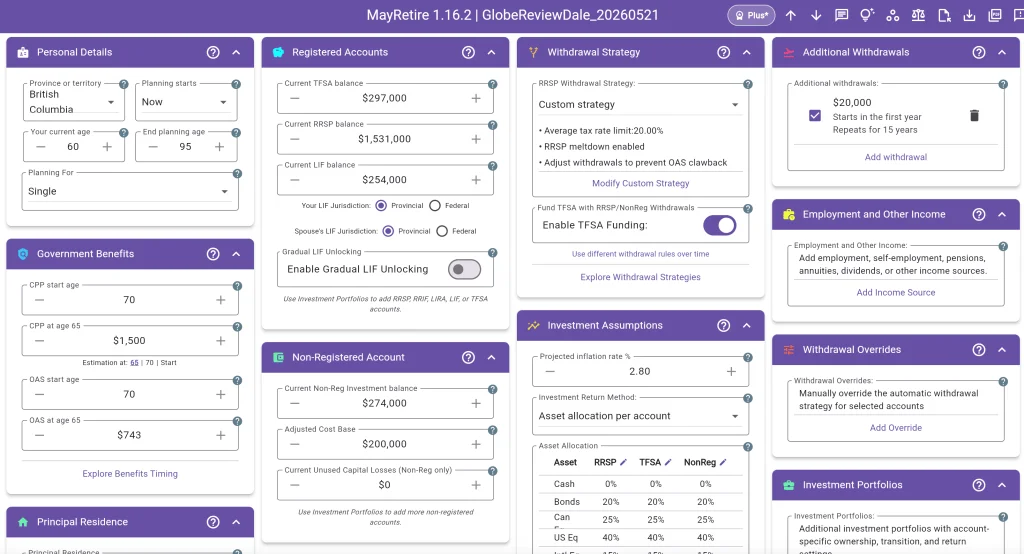
Herman is 60, single and recently retired. He has no mortgage and a net worth of $3,036,000, including his home. His financial assets are held across bank accounts, non-registered investments, a TFSA, an RRSP and a RRIF. He hasn’t set a specific spending target. His stated priorities are to draw income, keep taxes in check and reduce the potential recovery of OAS at age 70. He plans to defer CPP and OAS until then and doesn’t intend to leave much in his estate.

Start with the tax shape of the portfolio
The largest planning issue is the concentration in registered accounts. Herman has $1,531,000 in his RRSP and $254,000 in his RRIF, or $1,785,000 combined. Those accounts represent about 70 per cent of his investable assets. Their tax-deferred growth helped him build wealth, but withdrawals count as taxable income, so leaving most of the money untouched for too long could push income higher later.
Wealth planner Ian Calvert’s suggested starting point is a $75,000 annual RRIF withdrawal. The full amount is taxable. Herman’s non-registered investments are expected to produce about $17,000 in interest, dividends and capital gains, bringing estimated taxable income to $92,000. The planner estimates that this keeps Herman below $100,000 in annual income, with a combined federal and British Columbia marginal tax rate of 28.2 per cent and an average rate of 15.5 per cent. The income threshold also leaves some room for capital gains if he sells investments.
At those assumptions, the $75,000 withdrawal would leave about $60,500 after tax. That covers the stated lifestyle spending of $5,000 a month after tax. Calvert also suggests transferring $7,000 a year from non-registered assets to the TFSA. That move can build tax-free savings, though the model needs to account for the tax created by the withdrawals used to fund it.
Keeping most assets in the RRSP while moving smaller amounts into the RRIF can give Herman control over annual withdrawals during his 60s. The RRIF is suited to recurring income, while the RRSP can remain invested until money is needed. The plan changes at age 71, when RRSP assets must move to a RRIF; minimum withdrawals then apply the following year.
Use the early years to shape later income
Calvert’s projection assumes an annualized return of 5 per cent. With the suggested withdrawals, the RRIF is expected to maintain its value until age 72, when full minimum withdrawals begin. The point of drawing down registered savings earlier is to use Herman’s lower-income years and reduce the chance that large required withdrawals later overlap with CPP and OAS.
Herman could also spend more. Calvert estimates he could add about $20,000 a year from income generated by his non-registered portfolio. That income is taxable whether he spends it or leaves it invested, so choosing a lower spending level doesn’t make the tax disappear. The choice is whether to use more of his resources while he is younger, preserve more for later, or direct some wealth to family.
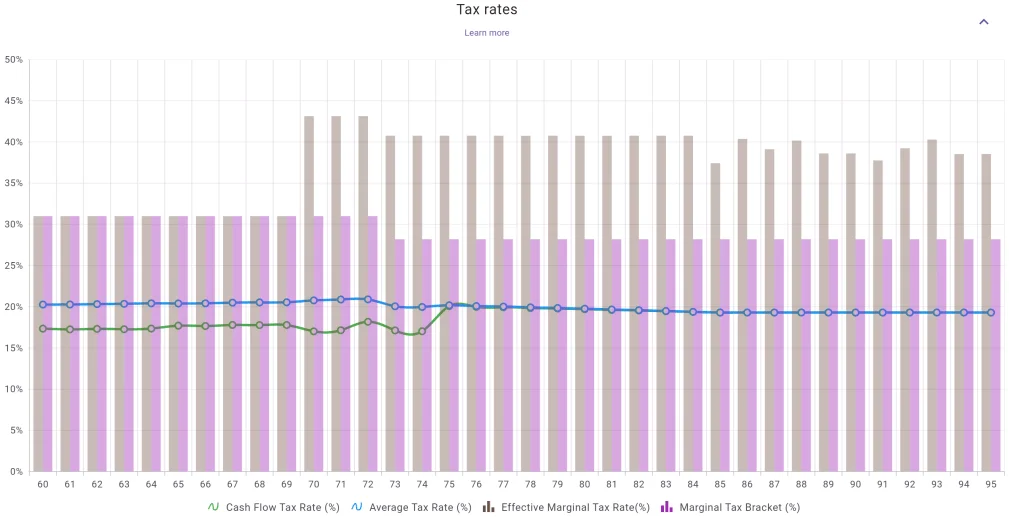
Delaying CPP and OAS until 70 appears workable in the projection because the RRSP, RRIF and taxable accounts can bridge the intervening years. Once minimum RRIF withdrawals start in 2038, total withdrawals are estimated to rise to about $100,000 a year. At age 72, with full RRIF minimums and enhanced CPP and OAS, projected gross income reaches about $145,000. Calvert estimates that this would raise Herman’s marginal tax rate to 38.29 per cent and lead to the recovery of about one-third of his OAS.
That later increase is the trade-off in the plan: delaying benefits lifts future income, while planned registered-account withdrawals earlier can spread taxable income over more years. The figures are estimates based on Herman’s circumstances and the assumptions used; they aren’t a promise of future income or tax results.
Test spending levels, not just account balances
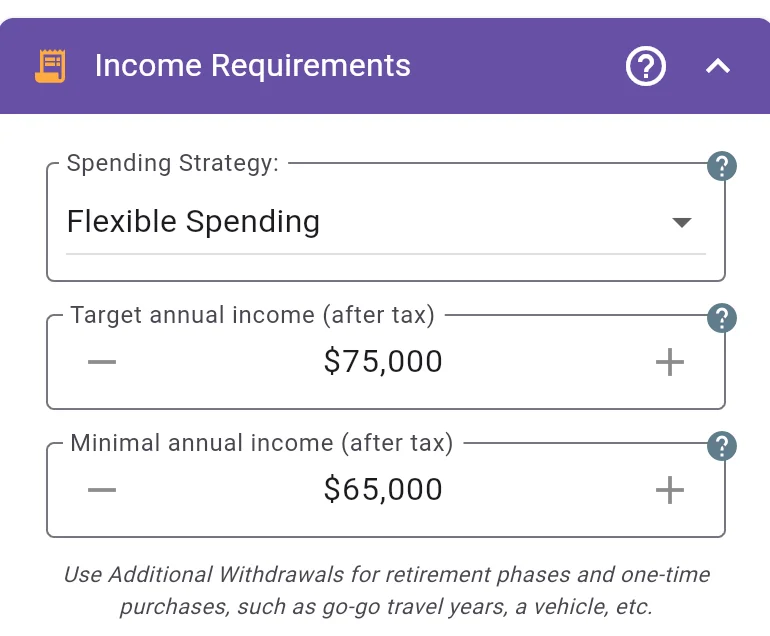
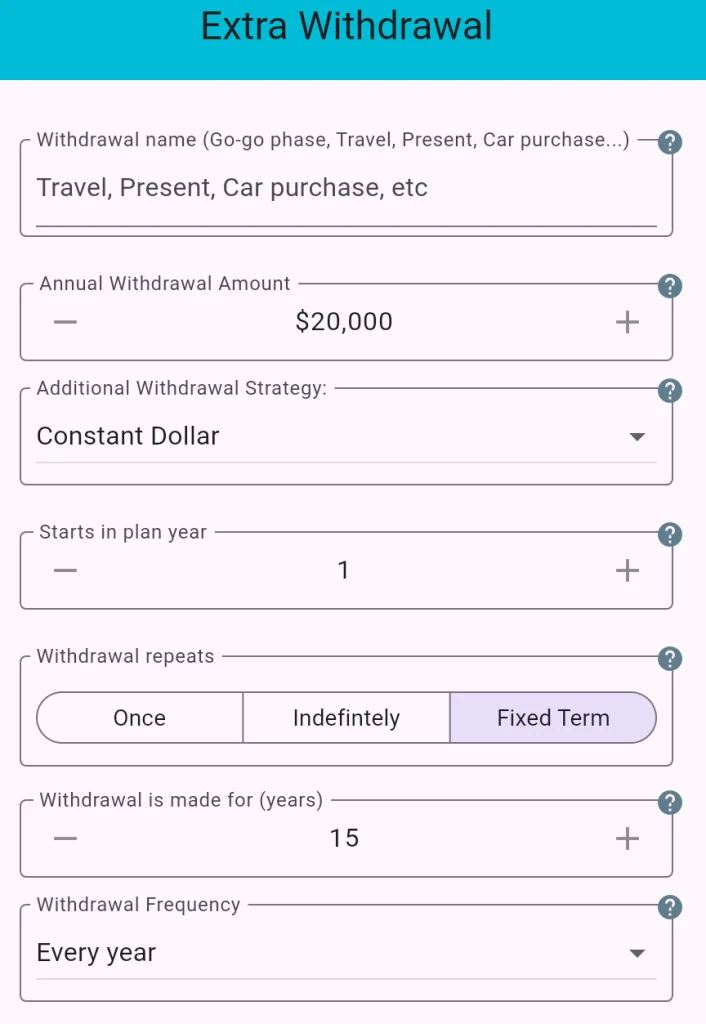
A separate MayRetire model explores what happens if Herman spends more in the early part of retirement. Its base target is $75,000 a year after tax, then it adds $20,000 of annual after-tax spending for the first 15 years. The higher target reflects a common planning question: whether to spend more during active years, then return to a lower level later, while allowing for the possibility that health or personal care costs rise in old age.
The model can include recurring changes in spending as well as one-time expenses or additional income. This makes it easier to see how a purchase, a temporary increase in travel or a shift in lifestyle might affect withdrawals and account values. The article’s projection uses steady, linear returns based on its asset allocation. Actual portfolio returns fluctuate, so that smooth path should be treated as a planning illustration.
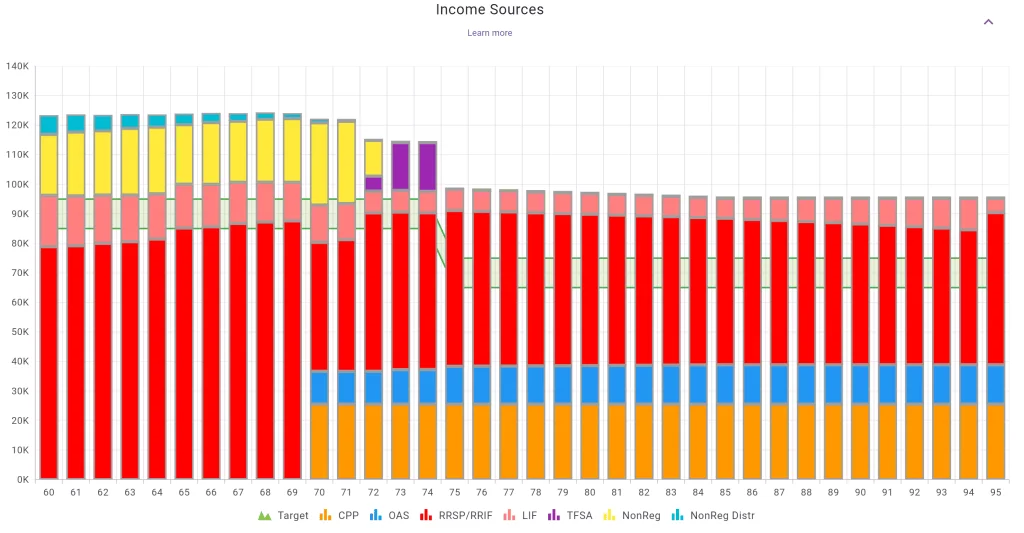
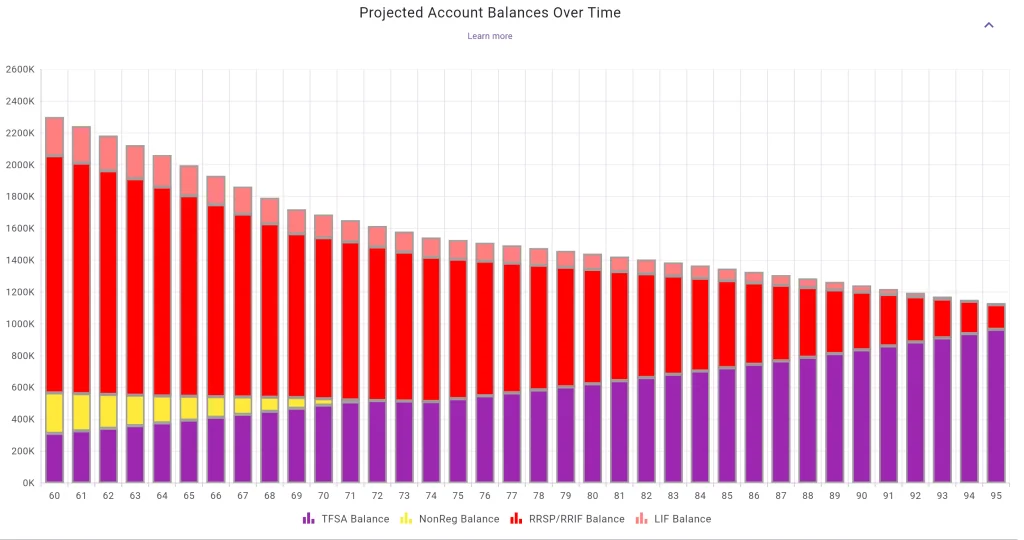
In the projection, RRSP and RRIF withdrawals and taxable investments do most of the work during the first decade. The taxable account is depleted by age 73; RRSP and LIF income then falls into a lower range. CPP and OAS become a larger, steadier part of the income mix. The model also shows account values, annual taxes, spending and TFSA contributions, making it possible to see how one choice affects the others.
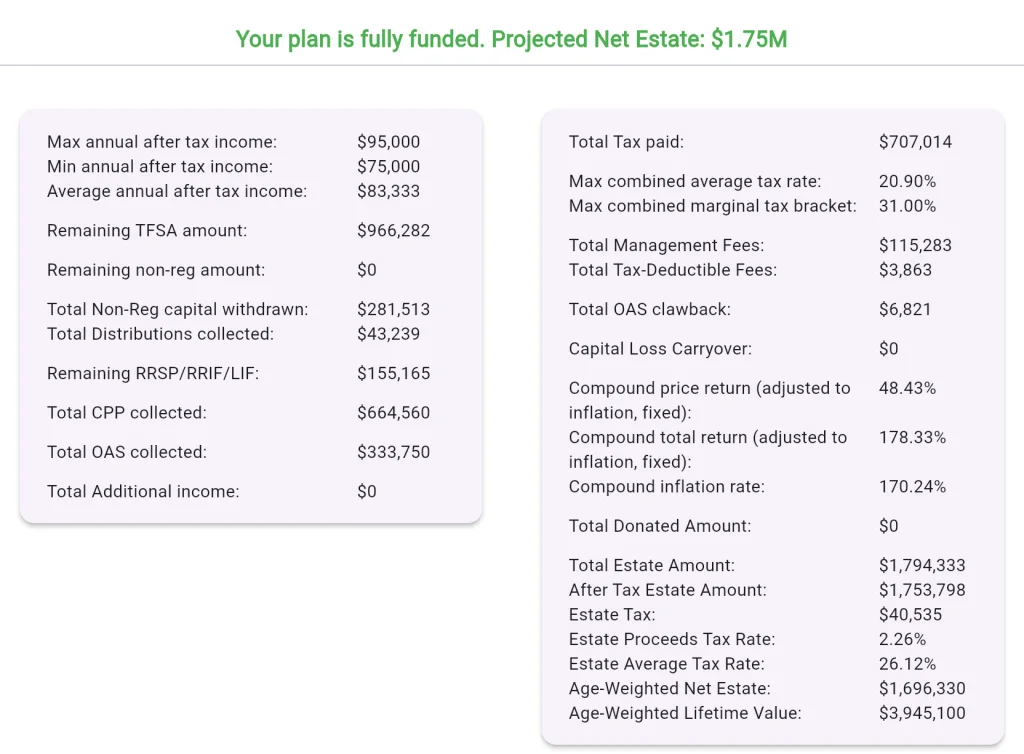
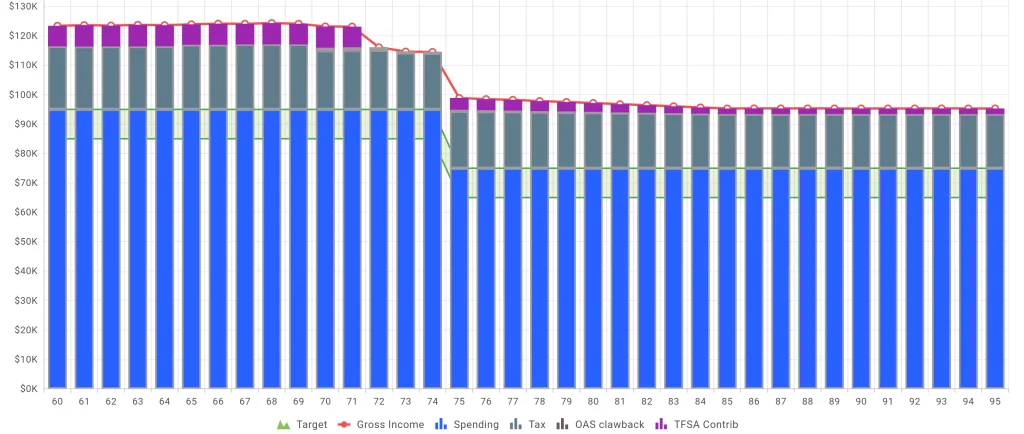
The planned TFSA transfers create additional tax in the early years, while earlier RRSP and RRIF withdrawals are intended to reduce the chance of higher income and OAS recovery later. The model aims to smooth taxes over time so that required RRIF withdrawals don’t pile on top of higher CPP and OAS income without preparation.
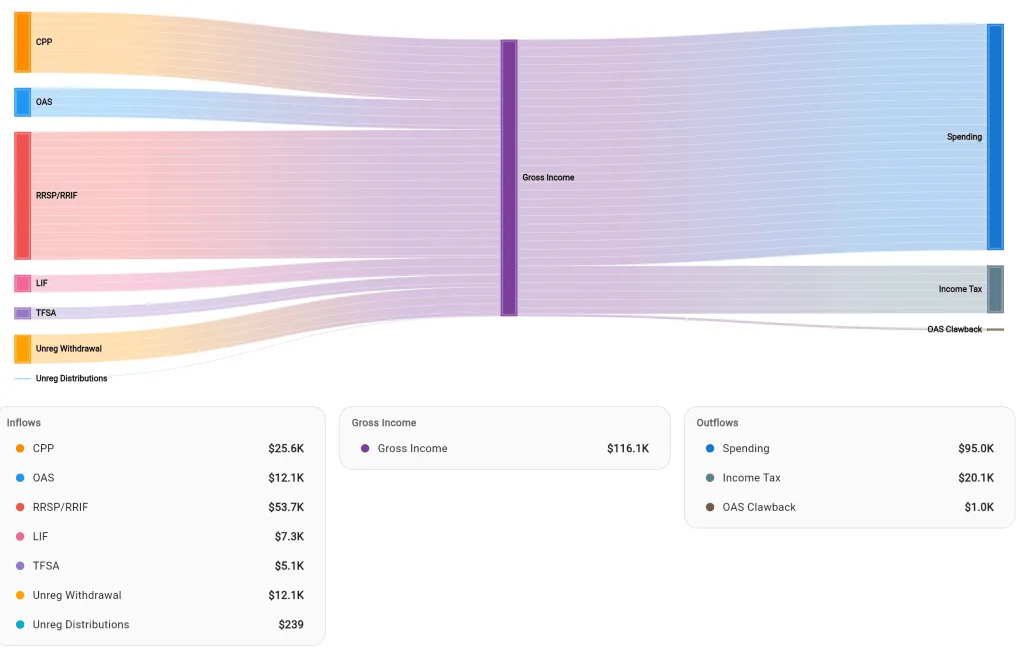
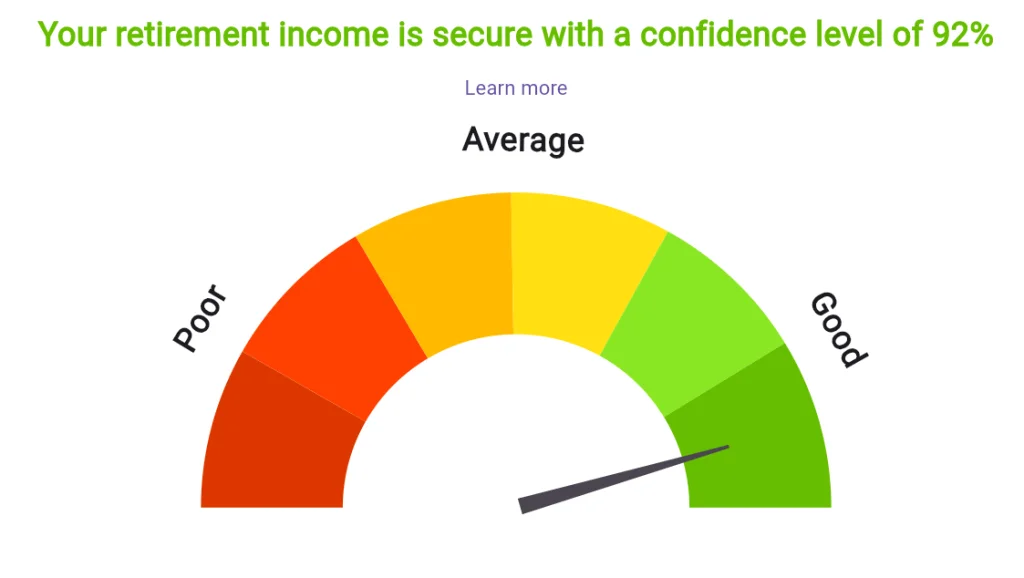
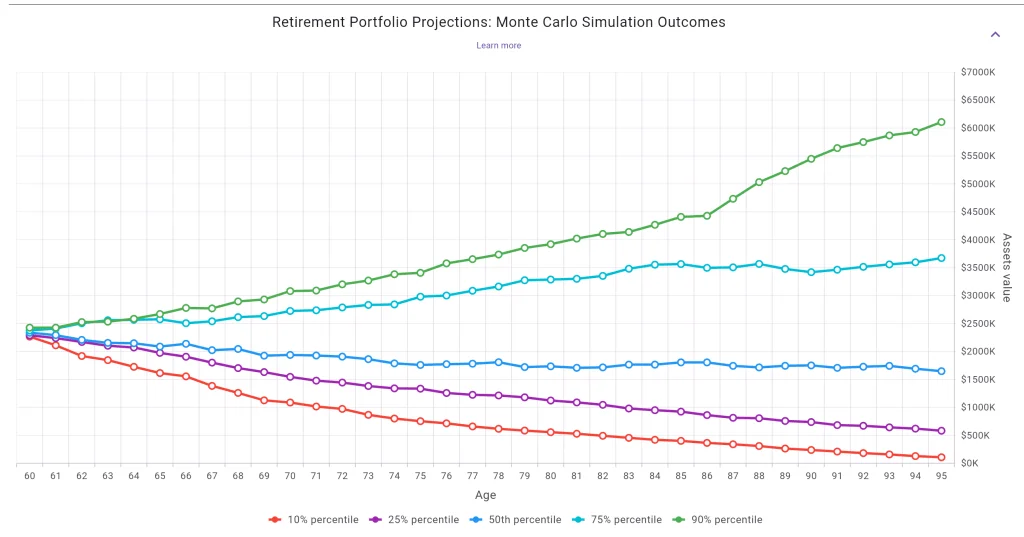
A year-by-year cash flow view can make the plan easier to assess than a single total for net worth. The age-72 schematic, for example, lays out income coming in and spending and other outflows going out. The projection reports a 92 per cent success rate after 500 Monte Carlo simulations. That result reflects the model’s assumptions and scenarios; it doesn’t guarantee that the plan will hold up to real market conditions or personal changes.
Make the plan answer personal questions
Herman’s projected net worth rises over time under the current spending assumptions. Since a large estate isn’t his goal, he could consider spending more, giving money to family while he is alive, or deciding what he wants his accumulated wealth to support. Each choice changes the balance between present-day flexibility and future security.
A practical plan starts with the accounts, expected income, spending needs and benefit timing, then tests different choices. The most useful result isn’t a single “optimal” withdrawal figure; it’s a clear view of what has to change if spending, returns or future costs differ from the projection.
MayRetire is used in the source to build and stress-test the cash flow plan. The article also links to the Retirement Club for Canadians, which describes help with creating a plan, and to MayRetire, which offers a free-use version and MayRetire Plus. A planning tool can organize assumptions, but the assumptions themselves deserve regular review as retirement unfolds.
Related reading: a modest RRSP withdrawal strategy, ways to lower taxes in retirement, and retirement planning habits.