Comcast’s 5.3% Dividend Yield: What Cash Flow and Payouts Show
Comcast’s low projected dividend payout offers a sizable cash flow cushion, though dividend growth and a high yield don’t remove the risks of owning its shares.
Comcast’s dividend looks better supported by its cash flow than its share price might suggest. The company’s shares have fallen nearly 50% over the past three years and are down 59% from their 2021 peak, while the annual yield is 5.3%. That combination can attract income-focused investors, but a high yield alone can’t establish whether a dividend will last. The more useful clues here are the cash available to pay it, the share of that cash already committed, and the company’s record of raising its payout.
Cash flow provides the main cushion
Comcast generated $19.2 billion in free cash flow last year, up from $12.5 billion the year before. Analysts expect free cash flow to reach $20.7 billion this year, a projected increase of 7.5%, and $22.4 billion next year. Those latter figures are forecasts, not reported results, so they describe expectations that could change as the business performs.
Free cash flow matters to dividend holders because it gives a rough view of the money left after operating costs and investment in the business. A company can fund a dividend in different ways, but cash generation helps show whether payments appear supported by ongoing operations. On the figures cited, Comcast’s cash flow is growing, giving the payout room to be covered without using all of that cash.
In 2025, Comcast paid $4.9 billion in dividends, equal to a 25% payout ratio based on free cash flow. The article expects a similar dividend bill this year, with the ratio declining to 24%. Put simply, those ratios mean that the dividend uses about a quarter of the free cash flow measured in this comparison. The remaining share provides a cushion against weaker cash generation, while also leaving cash available for other business needs.
A low payout ratio is reassuring, but it isn’t a promise. Free cash flow can fall, and projections can miss. The cushion would shrink if cash generation weakened while dividend payments stayed level or rose. Investors considering the income would want to track actual results against the forecasts and see whether the payout continues to take a modest share of cash flow.
What the yield does—and doesn’t—tell you
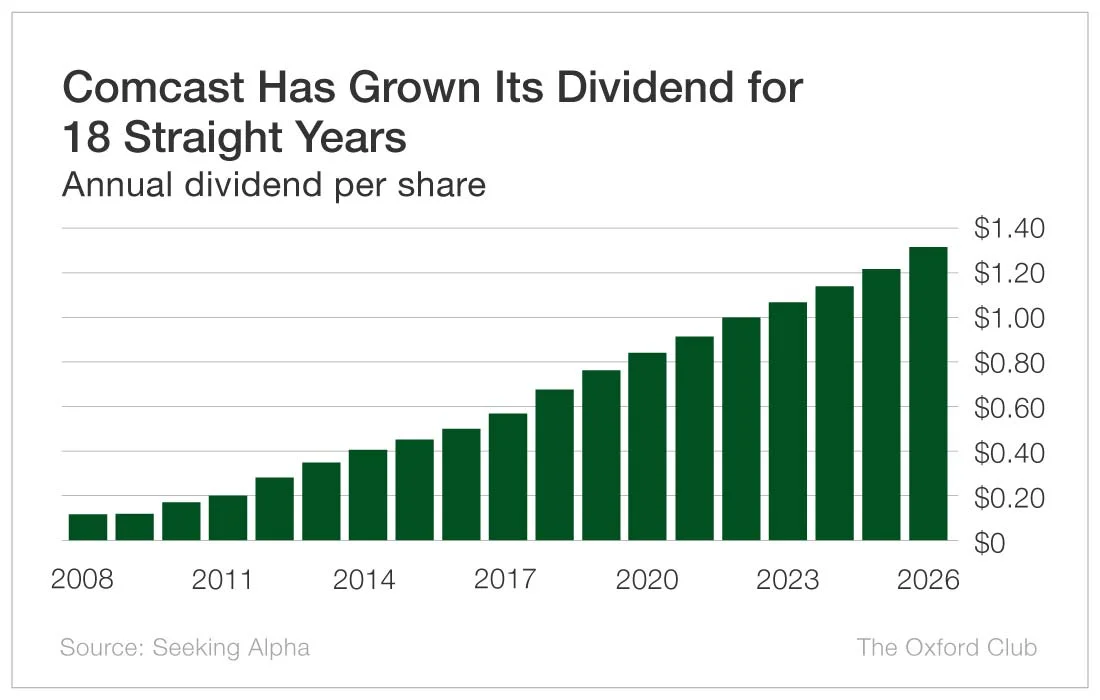
Comcast pays a quarterly dividend of $0.33 per share, which works out to a 5.3% annual yield at the share price used in the source. Yield is a snapshot: it relates the annual dividend to the current share price. When a share price falls while the dividend stays the same, the yield rises. That can make the income look more appealing, but it can also reflect investors’ concerns about the company or its future prospects.
For a household weighing dividend income, the quoted yield should therefore sit alongside the underlying payout and the risks of holding the shares. The yield can change as the share price moves, and a dividend can be reduced. Neither a high yield nor a history of increases locks in future income. The cash flow figures offer evidence about the current ability to pay; they can’t settle how the business or share price will develop.
Comcast has increased its dividend every year since reinstating it in 2008. The company had halted the dividend in 1999 before bringing it back. The source describes the annual increases as an 18-year run. That record shows a consistent pattern over the period cited, but past increases don’t guarantee another one. Investors may find the history useful when assessing the company’s approach to returning cash, while still keeping the latest cash flow and payout figures in view.
Shareholder experience includes more than income
The source pairs Comcast’s dividend record with a sharp decline in its share price. That matters because a household’s total experience as a shareholder depends on both the income received and the value of the shares held. Dividend payments can provide cash along the way, but they don’t erase a fall in share value. Someone focused on the dividend may judge the company differently from someone who needs to sell shares soon or is concerned about the overall value of a holding.
The source author also describes frustration with Comcast’s customer service after years of using its internet and other services. That personal experience gives context to the company’s reputation in the piece, though it isn’t a measure of dividend coverage. For assessing the payout, the financial details are more direct: last year’s $19.2 billion in free cash flow, the $4.9 billion dividend total in 2025, and the projected payout ratios.
The company began in 1963 as a cable systems seller in Tupelo, Mississippi. It acquired a Muzak franchise in 1968, went public in 1972, and launched HBO in 1977, initially serving 20,000 customers. Those milestones sketch the company’s history, while the dividend question turns on its present cash generation and what happens to that cash over time.
A measured read on dividend safety
The figures support a cautious case that Comcast’s dividend has room behind it: free cash flow rose last year, is forecast to grow further, and the projected payout ratio is about one-quarter. The annual increase record adds context. Together, those details help explain why the source assigns the dividend an A safety rating.
That rating is an assessment, not a guarantee or a measure of whether the shares suit a particular household. The key points to revisit are whether free cash flow meets expectations, whether the dividend stays near its current level, and how the share price affects the yield. Comcast’s current numbers suggest a substantial cash flow buffer; future results will show whether that buffer holds.
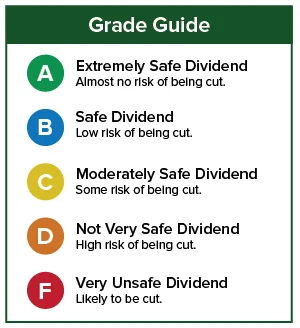
The source’s analysis applies to individual stocks and says its Safety Net tool doesn’t assess exchange-traded funds, mutual funds, or closed-end funds. For anyone comparing income options, the takeaway is to treat the 5.3% yield as one part of the picture, alongside cash flow, payout levels, share-price movement, and the uncertainty in forecasts.